
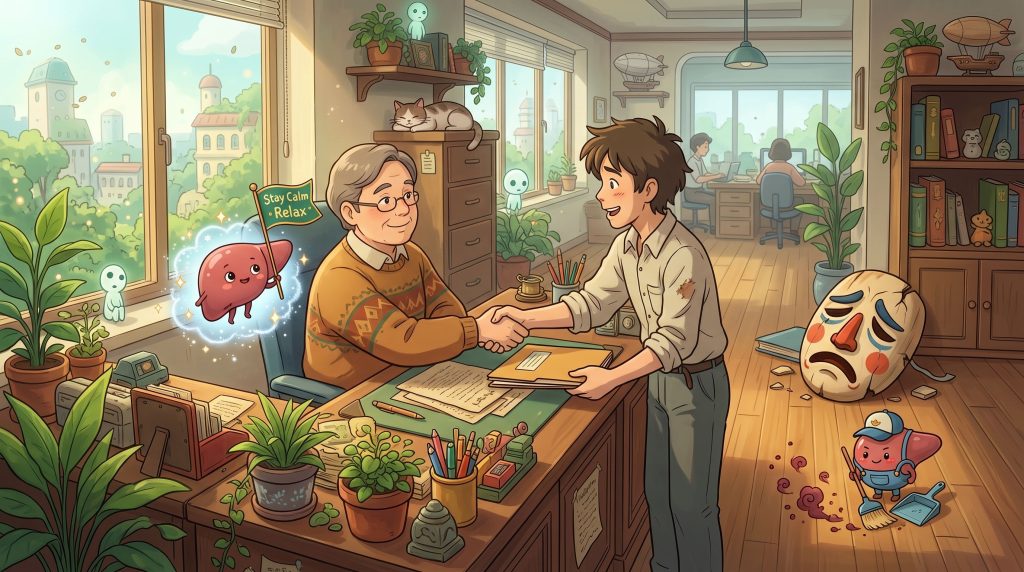
Anger is power. It is a prerequisite trait to be a boss, a business owner, and a good parent.
There is some truth in that statement. Anger is a powerful emotion that can make people—especially your subordinates—get in line. Even your kids won’t get in line if you can’t get angry at them. It is very heartbreaking to parents, especially me, that we have to be able to get angry and scold our kids in order to make them learn from their mistakes and avoid doing the same mistake again.
When my first kid was born, I was overjoyed and thought I would like to do my best to raise my kid and be a good father. There was only joy and smile on my face. Helping my spouse to babysit my kid wasn’t a chore at all. I did like to play with my kid, especially when they were below three years old. We would sing, dance, run around the house, play hide and seek, and do all sorts of games. Sometimes we messed up and broke something in the house. It was all about the joy of being together.
Unfortunately, all good parties will come to an end. My kid grew up into preschool age and started exploring more about his surroundings. Then the problems started to come. I couldn’t just sit still and not reprimand him, as he started to experiment with things that I considered dangerous—like scissors, knives, hot kettles, or running outside too quickly without considering there were a lot of motorbikes or cars that might crush him.
Without me even realizing it, I scolded him, warned him, even got angry at him, due to my concern about his safety. It was an enlightening moment to me, because suddenly I realized that anger and scolding from my parents were actually because they were concerned.
It was my belief that if I didn’t get angry at him, I wasn’t concerned enough about his safety and wellbeing—until my kid grew to be a teenager. Though he had learned things to make his safety out of my concern, there were things that concerned me more: his relationship with other people. For me, it was easy to teach my son about physical safety, as he learned by pain. When he didn’t listen to me and ran too fast, somehow he stumbled, fell, and got hurt, and out of concern I scolded him to be aware of his surroundings that led to his fall.
However, courtesy and being polite to others were very difficult to teach, because the cause and effect of a behavior wasn’t easily observed in the short term. If my son said random rude things to my friend, for example, my friend wasn’t offended at all and considered it as nothing. Therefore my son kept arguing why I was mad at him, though my friend wasn’t. It was a challenging moment for me as a parent.
Until, once again, he said rude things at school, and one of his friends was offended, and the problem escalated. After he saw the social implication of his rudeness, he learned his lesson. It seems my kid learned best from pain and consequences than through words alone. This made me ponder: do I need to be angry at my son if he learns best from mistakes and pain?
That question kept lingering in my mind. Even when I started my own business, I began to see my subordinates tend to repeat their mistakes, even though I was angry at them all the time. Anger was good at asking for short-term results, an immediate action. But when the anger was gone, the bad habit came back. Another question came up: did this make me need to be angry all the time to keep my subordinates in check?
For a period of time, that was my way to manage people—until the harsh reality came into the picture. My body gave me signs that something wasn’t right. I got fatigued easier, I got frequent headaches and some minor things. I was aware of that, and usually after one or two days of holidays, the symptoms were gone. However, as I aged, my body wasn’t able to remedy the symptoms easily; it took longer and longer.
Out of curiosity, I learned qigong and Inner Smile meditation. I stumbled on the reality that my anger—though out of love for my kid, or necessary requirement to run my business—damaged my body, especially my liver. I suspect there will be many chronic illnesses if I keep doing this. I did my research with Gemini, and here is the result (this is only additional information, you may skip it):
The liver is the ultimate biochemical powerhouse of the human body. While the kidneys focus heavily on fluid and blood pressure management, the liver is responsible for over 500 distinct functions, acting as your central manufacturing plant, detox facility, and metabolic bank. [1, 2, 3, 4]
When you shift into a calm, meditative state, the liver transitions from a high-alert defensive posture (processing toxins and pumping out emergency fuel) into a state of deep storage, healing, and efficient bile production. [1, 2] Here is a detailed biochemical analysis of the liver, along with how your Inner Smile meditation influences its functions:
1. Metabolic Management: Insulin-Like Growth Factor 1 (IGF-1)
• What it is: A major polypeptide hormone manufactured and secreted by the liver, primarily stimulated by Growth Hormone from the brain. [1, 2]
• Its Function: IGF-1 is the primary driver of systemic cellular growth, tissue repair, and muscle regeneration. It acts like a construction foreman, telling your body’s cells to rebuild.
• The Meditation Impact: Under chronic stress, high cortisol levels suppress IGF-1, halting your body’s self-repair mechanisms. When your meditation lowers cortisol, your liver is cleared to release IGF-1 efficiently, shifting your body out of “tissue breakdown” mode and into active cellular healing. [1]2. Emergency Fuel Control: Glycogen and Glucagon Balance
• What it is: The liver acts as the body’s primary energy bank, storing glucose in a compressed form called glycogen. [1, 2, 3, 4]
• Its Function: When you feel threatened or anxious, stress hormones force the liver to rapidly dump this stored sugar into your bloodstream (glycogenolysis) to feed your muscles for a fight. [1, 2]
• The Meditation Impact: Living in constant anxiety keeps your blood sugar elevated because your liver thinks it is constantly fleeing a threat. Smiling into your liver acts as a safety signal. The liver stops dumping excess sugar and instead safely stores glucose away, stabilizing your energy levels and preventing metabolic exhaustion. [1, 2, 3, 4]3. The Detoxification Pathway & Glutathione Production
• What it is: The liver runs two distinct chemical pathways (Phase I and Phase II detoxification) to neutralize everything from environmental toxins to old hormones. Its most powerful weapon is glutathione, the master antioxidant. [1, 2, 3, 4, 5]
• Its Function: Glutathione neutralizes free radicals and prevents oxidative damage to your organs. [1]
• The Meditation Impact: When you sit in a relaxed, meditative state, blood flow to your abdominal organs increases by up to 40%. This massive wave of oxygen-rich blood gives the liver the raw energy it needs to synthesize glutathione and clear out cellular waste. This sudden deep cleaning is why a good meditation session can make you feel physically lighter and more clear-headed.4. Angiotensinogen (The Cardiovascular Balancing Act)
• What it is: A circulating hormone precursor continuously produced and secreted by the liver.
• Its Function: This molecule interacts directly with the renin secreted by your kidneys to regulate blood pressure.
• The Meditation Impact: Just like the kidneys, the liver responds to a calm nervous system by stabilizing its output of angiotensinogen. Together, your liver and kidneys work in perfect harmony to keep your blood pressure smooth and steady. [1, 2, 3, 4, 5]*The Taoist Perspective: The Seat of Anger
In Taoist philosophy, the Liver belongs to the Wood Element and is the energetic home of anger, resentment, and frustration. [1, 2] Physiologically, this makes perfect sense: when you get angry, your jaw clenches, your rib cage tightens, and blood flow to the liver is physically restricted. In TCM, this is called “Liver Qi Stagnation.” By bringing a gentle smile to the right side of your rib cage (where the liver sits), you consciously melt that physical armor. You are giving your body’s primary chemical filter the exact physical space and blood flow it needs to flush out toxins and transition from a state of hot, reactive anger into the virtue of kindness and generosity.
Now, I reserve my anger energy for something really important. It is my last resort to sort things out. At first, without anger, I was confused. I always questioned how to show your determination, conviction, or dominance without anger energy. I pondered how to make them obey me and do their jobs without me even getting angry. There was really an inconvenient time—I was afraid people around me knowing I wouldn’t get angry at them would take it as a sign of weakness. However, the benefit of not being angry is much more than being angry. I decided to stick with it.
After a lot of trials, I figured out that we can influence others by talking it out, discussing it, and listening to their situations. For better influence, instead of anger, I can provide benefits and negotiate with them. I put myself into a position where they see more benefit to interacting with me than without me. Therefore if they do not respect our agreement, then I just can pull out from interacting or collaborating with them. Pressuring them to honor previously agreed terms.
In 8 out of 10 cases, this method provides me with better results than using anger. This method requires a lot of time to listen, discuss, and ponder creatively on any issues—it takes time to work. However, when it really runs and everyone knows the rule, in my experience, I save a lot of time micromanaging everyone. Even my teenage son is starting to take responsibility and maturity. My employees start to work at their best without fear of getting scolded out of nowhere. They accept evaluation and are able to improve themselves.
The cost of anger outweighs its benefit. Besides, there are many ways to solve and influence others—why should we risk our health?