
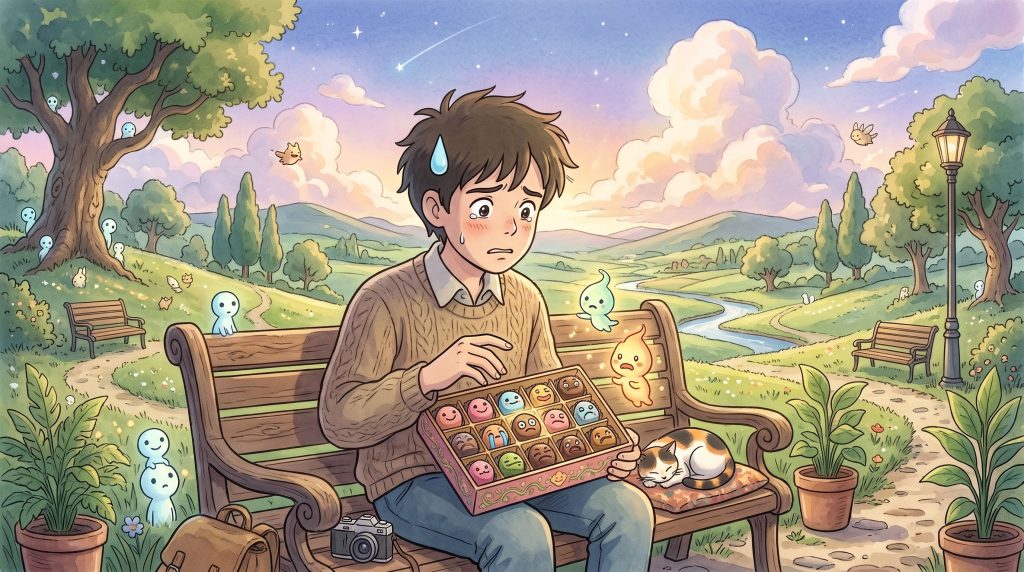
“You never know what you’re gonna get.” This famous line comes from the 1994 movie Forrest Gump, spoken by Tom Hanks. It means life is full of surprises, and you cannot predict what will happen next.
When I graduated after four years of study in college, I felt joyful and happy in my heart. Finally, I had finished years of study, and it was time for me to earn my own money and build a life full of glory—with plenty of possessions and a world to explore. It was a moment full of dreams and hope.
However, reality wasn’t always sweet and juicy; it was the exact opposite. It was sour and devastating to a person’s confidence. I considered myself a good student: I read my textbooks, completed my assignments, and actively participated in discussions. I was inspired by lecturers who always said that the younger generation, with vibrant energy and a hardworking ethos, would be the pillar of the nation and bring our country to an unprecedented level of prosperity. It felt like a calling to become an entrepreneur rather than enter the job market.
It was a great dream, but it was unfounded and detached from reality. I am an entrepreneur at the moment—I did fulfill my dream to become an entrepreneur who answers to no boss. I have no holidays because I do not have fixed workdays; I can delegate work to employees and use technology to lower operational costs. But did I achieve this due to my hard work and vibrant youth energy?
No, I did not. In fact, my hardworking ethos led me nowhere and brought me dangerously close to bankruptcy.
Was my achievement due to the knowledge I gained from university? The short answer is no. The long answer is that my acquired knowledge did shape my ability to understand the business world better than someone without a business background—yes, my degree was in business management with an emphasis on accounting and finance.
However, hard work is simply putting more energy into something you do. It is like pressing the gas pedal in your car to go faster. When you already know where you are going, going faster helps you arrive sooner. If you don’t know where you are going, driving faster only causes you to get lost quicker—or crash into a river.
Theoretical knowledge alone, without real-world experience, won’t work either. Being an entrepreneur and becoming your own boss is no joke. For me, it meant constant anxiety and non-stop competition, with instability as my daily reality. I started seven businesses, failed six, and only succeeded with the last one. It was a moment of complete good fortune; if I had failed that last one, I wouldn’t have known how to put food on the table. It was a “sink or swim” moment for me.
Even though my last business started to generate income, it remained full of instability, anxiety, and frustration for another ten years. After that, I realized it was better to accept business instability as a fact rather than try to swim against it. I learned to prepare myself mentally and physically to quickly accept realities—whether losing money or clients—and adapt to deal with them. I also recognized the importance of building diverse networks to find business partners to collaborate with.
The result was stability. Accepting instability and adapting to it brought a sense of stability to my mind. My acceptance of the impermanence of being human brought clarity, as I was no longer clinging to any specific lifestyle. The drawback is that this state of understanding demands constantly learning new things, having the humility to accept criticism, and maintaining the ability to see failure as a springboard to success.
Yes, life is like a box of chocolates—you can never predict what will happen or what flavor you will get. We simply need to learn to accept whatever comes our way and learn how to navigate it.