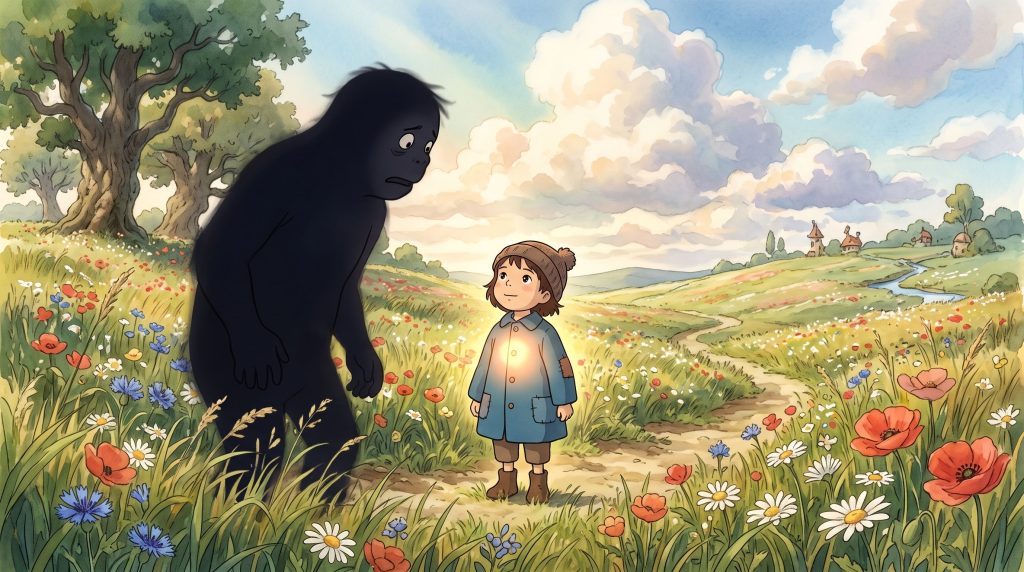
During my childhood, I was often afraid of people who were bigger than me. Who isn’t? They can push you off the street with one hand and pin you to the ground without giving you any chance to fight back. It’s horrible to imagine what a bigger and stronger person can do to you.
However, if you look at nature, you’ll notice something interesting: many of the biggest and strongest creatures—like dinosaurs—went extinct, while cockroaches and other insects still exist and continue to populate the earth. We human beings are believed to have evolved from small mammals that lived when dinosaurs walked the earth. And here we are now, evolving into what we consider the smartest creature on the planet.
When I was in elementary school, I was afraid of bigger kids. My body wasn’t too small, but I still felt intimidated. At the same time, I was also known as someone who dared to oppose the people who bullied me, even though I was afraid of getting hit in the face. Why? Because I believed that if you don’t step up to oppose your oppressors, they will come back to demand more from you. It felt better to stand up and fight for your rights. Still, that didn’t mean I forgot how painful it was to get punched.
It was, in a way, a calculated move. When I got bullied at school, I always knew that if the bully threw the first punch, hit me, and I went down, they would receive a harsher punishment from teachers and other adults. If bullying happened outside of school, I could rely on the police—or, at worst, my legs to run away.
Anyway, I didn’t run away from bullies simply out of fear. I ran to survive, and to stop people from bullying me again and again in the future. There are many ways to be strong; it isn’t always about having the biggest body. Many times, I’ve proven that a courageous heart—especially when you’re facing something physically stronger—forces the mind to generate ideas. An idea is a kind of superpower that human beings can possess. If you rely too much on physical prowess, your brain may never be trained to generate creative solutions.
It’s easy to say, “Be brave”… but it’s not easy to live that way in this world. From the perspective of Taoist qigong, though, courage can be cultivated. How? By smiling to your lungs.
“Courage” is an adjective, right? It describes character. Some say courage is an innate trait you’re born with. Others say it’s a matter of choice. It’s debatable. A Taoist might say it is innate, but also acquirable—because bravery is also an emotion, and emotions are generated by our organs, in this case, the lungs.
In the cycle of the five elements, the lungs belong to the metal element. I don’t know why the lungs are categorized as metal. I suppose that in the ancient world, strong people were seen as having big chests; when they breathed, the air from their breath could “blow others away,” and big guys were also seen as stubborn—like metal. That’s just my guess; I need to check the history of it later (remind me).
Anyway, you can smile to your lungs. In the Inner Smile meditation I learned, the lungs—besides holding positive emotions such as bravery—also store negative emotions such as regret and sadness. Therefore, when you smile to your lungs, you dispel sadness and regret and bring out the courage inside you to overcome life’s challenges.
If you are a science skeptic, here is Gemini AI’s answer about what biochemical substances the lungs secrete when you smile to them:
While people think of the
lungs as simple air balloons, modern medicine now recognizes the “endocrine lung”. The lungs contain specialized cells that actively produce, modify,
and secrete powerful hormones and local signaling chemicals into your blood.
When you slow down your breathing and smile
into your lungs, you trigger an immediate shift in this chemical factory:
What Your Lungs Secretes When You Focus On Them
- The Blood Pressure Regulator (ACE): Your lungs are covered in a vast web of blood vessels. They produce an enzyme that converts hormones to regulate blood pressure. When you do deep, relaxed breathing during meditation, your lungs help lower systemic blood pressure and ease the workload on your heart.
- Serotonin and Peptides: The lungs house neuroendocrine cells that secrete serotonin and calcitonin gene-related peptide (CGRP). These locally regulate immune defenses and smooth muscle tension. Relaxing your chest signals these cells to keep your airways open and your immune lining calm.
- Nitric Oxide (The “Miracle Molecule”): While not a traditional hormone, your lungs and nasal passages flood your bloodstream with nitric oxide when you take slow, intentional breaths. Nitric oxide is a powerful vasodilator—it relaxes your blood vessels, increases oxygen absorption, and kills off viruses and bacteria. This molecule is a major reason why deep breathing gives you an instant wave of physical clarity and warmth.
The Emotional Release of the Lungs
In Taoist Inner Smile
meditation, the lungs are famously known as the home of grief, sadness, and attachment.
When humans feel sad ordepressed, they subconsciously collapse their chest and hold their breath,
restricting oxygen and trapping physical tension. By actively bringing your
awareness to your lungs and sending them a “smile,” you are forcing that
chronic physical tightness to open up. The “good feeling” you
experience is a literal rush of fresh oxygen, a surge of nitric oxide, and the
brain signaling that it is safe to let go of sadness and breathe fully again.
Being brave enough to accept reality and then challenge the future is an attitude we need in order to live in this modern world. If you already have a talent for it, keep and preserve it. If you don’t, don’t worry—you can still cultivate it. Just remember: when you smile to your organs, your organs smile back. In this case, the lungs can “smile” back to you, release your sadness and grief, and bring out the courage you need to face the future.